
Lagos service charge: the account you already owe
Section 10 of the Lagos Tenancy Law entitles tenants who pay service charge to a written account every six months. Most managers have never issued one.
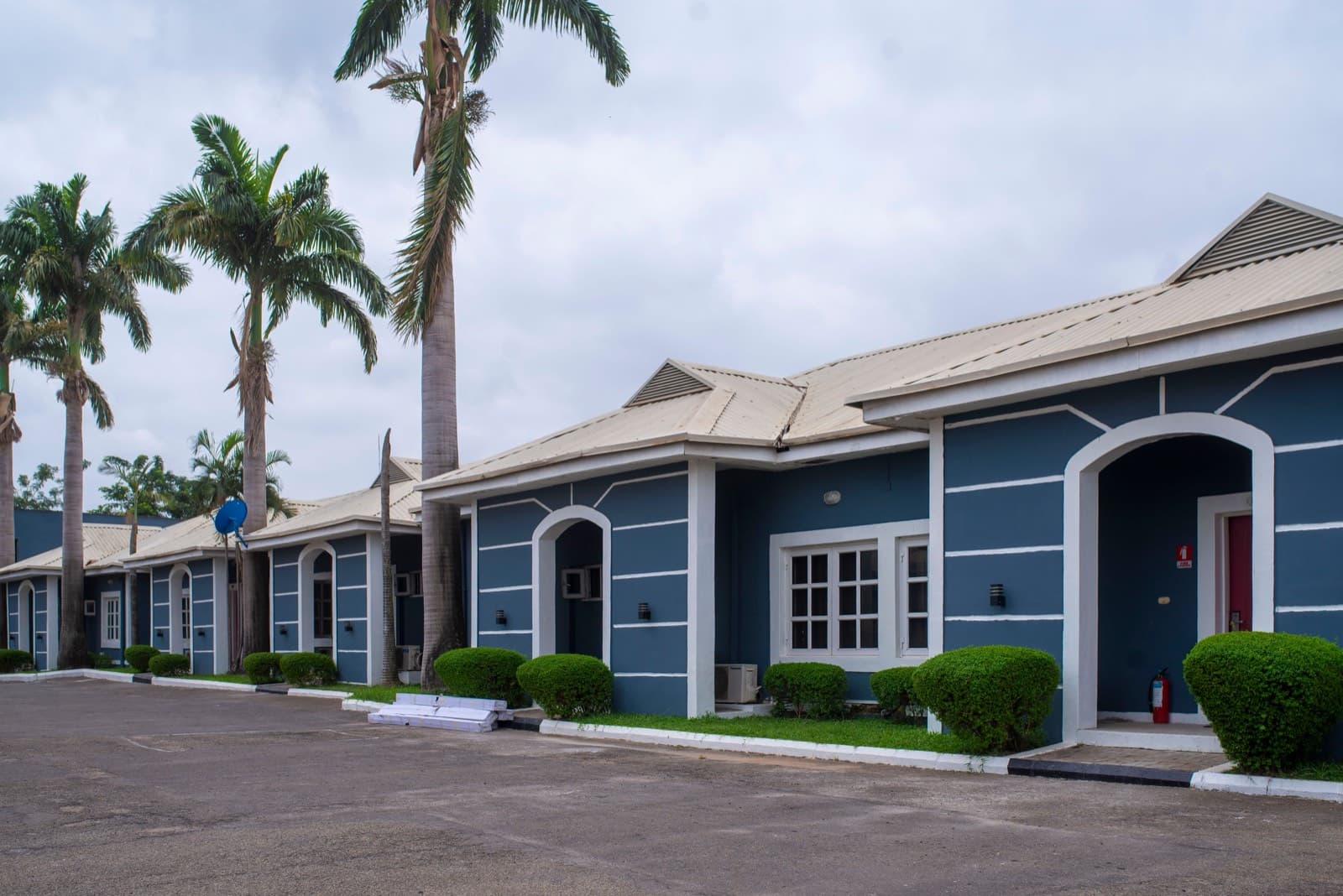
If you collect service charge on a block of flats in Gbagada, the tenants paying it are entitled to a written statement, at least every six months, showing how that money was spent. That duty has sat in section 10 of the Lagos State Tenancy Law since 2011. In practice it is almost never done, and the tenants who could ask for it mostly do not know the section is there.
Getting away with that has become harder, because the cost of running a building moved violently this year. The National Bureau of Statistics put the average pump price of diesel at ₦3,277.47 a litre in May 2026, against ₦1,420.17 in February. A charge you set in January was priced before any of that happened, and by May you were buying the same fuel at more than twice the February figure. You will be going back to those tenants for the difference, and the statement is the document that decides whether they accept it.
The order to work in
- Check the address, because four areas of Lagos sit outside this Law entirely.
- Record spending building by building, which for most firms means one bank account per building.
- Split the budget into running costs and replacement of things that wear out.
- Reconcile the last six months line by line against invoices you can produce.
- Decide what a surplus or a shortfall does, before anyone sees the figures.
- Issue the statement, and the separate receipts section 10 requires.
Check the address first
Section 1(1) applies the Law to all premises in Lagos State, business and residential. Section 1(3) then names four areas that are exempt from it: Apapa, Ikeja GRA, Ikoyi and Victoria Island. Section 1(2) separately exempts certain kinds of premises, including student and staff housing owned by an educational institution, emergency shelter, and care, hospice and hospital accommodation. The Governor can exempt further areas or premises by publishing an order in the State Gazette, so treat those four as the list the 2011 text gives rather than a permanent one, and ask your solicitor to check for later orders before you rely on the exemption either way.
The exemption produces an odd result. Ikoyi and Victoria Island hold a large share of the serviced towers in Lagos, and a tower with lifts and pressurised water is exactly the building whose service charge is big enough to fight over. So the buildings with the most complicated service charges are often the ones this Law does not reach. A manager running a serviced block on Ozumba Mbadiwe owes nothing under it. A manager running walk-up flats in Ketu does, as long as the payment and the building meet the conditions in section 10, which the next section sets out.
None of that is freedom. In an exempt area the duty comes from the lease or the deed instead, and a commercial lease will often impose more than section 10 does: a certified statement from a named surveyor, a fixed timetable, sometimes a right for the tenant to inspect the invoices. So read the lease or deed for the building before deciding you are free of anything. Lekki is covered and Ikoyi is not, so this does not divide along island and mainland lines. Those same four areas also decide whether the Law's notice periods apply to you, which I set out in the post on quit notices.
What section 10 actually requires
Section 10 is a single sentence, and it is short enough to read in full:
- In any case where the landlord or his agent in addition to rent requires the tenant or licensee to pay –
(a) A security deposit to cover damage and repairs to the premises;
(b) For services and facilities for the premises; or
(c) Service charges in flats or units that retain common parts on the premises,
The landlord or his agent shall issue a separate receipt to the tenant for payments received and such tenant shall be entitled to a written account at least every six (6) months from the Landlord of how monies paid were disbursed.
Two words there are worth translating. A "licensee" is someone occupying by permission without a tenancy, such as a caretaker in a staff room, and section 47 confirms they have no legal interest in the premises. "Disbursed" simply means paid out. Four things in the sentence then decide how it applies to you.
It is conditional, not universal. The duty applies only where you require one of those three payments on top of rent. A tenant paying an inclusive rent, with no separate charge of any kind, is owed no section 10 statement, because there is no separate payment to account for.
It covers more than service charge. A security deposit against damage, and any payment for services and facilities, carry the same separate-receipt duty. So if you take a ₦500,000 caution deposit and receipt it on the same slip as the rent, you have not complied.
The duty reaches you, not only your client. The receipt duty names "the landlord or his agent". The written account is expressed as owed "from the Landlord", which reads at first as the owner's problem. It is not, because section 47 defines "Landlord" to include "the attorney, solicitor, agent or caretaker of any such landlord". A managing agent sits inside that definition. Section 47 separately defines "Agent" as a person usually employed by the landlord in letting the premises or in collecting the rents, which is a description of your firm. So you prepare the statement, and you put the authority to issue it on your landlord client's behalf into the management agreement in writing.
Six months is the longest gap allowed, not a timetable. "At least every six (6) months" sets a maximum interval rather than a date, so nothing stops you issuing one quarterly where the building justifies it.
Ignoring section 10 will therefore not get you prosecuted. What it costs you is the argument with every tenant you later ask for more money, because you will be asking them to accept a figure whose workings you have never shown them.
Why this stopped being paperwork in 2026
Those are national averages from the NBS Automotive Gas Oil Price Watch. Diesel rose from ₦1,420.17 a litre in February 2026 to ₦2,474.69 in April and ₦3,277.47 in May, which is 86.40% above the ₦1,758.26 recorded in May 2025. The cheapest state average in the May release was Kogi at ₦2,823.85, so every state in the country averaged above ₦2,800 that month.
One caution on those figures: May is the most recent Automotive Gas Oil edition the Bureau has published, so it is the latest official picture rather than a current price, and what your supplier quotes this week is a number only your own invoice can tell you.
Take a 24-flat block that burns about 1,000 litres of diesel a month. In February that fuel cost ₦1,420,170, and in May the same 1,000 litres cost ₦3,277,470. The difference, ₦1,857,300 in a single month, works out at roughly ₦77,000 per flat, on a line you had already priced and collected for the whole year. No reserve absorbs that, and no annual budget set in January anticipates it.
Which is why the interval matters. A manager who reconciled in June had the shortfall measured, with the invoices behind it, in time to put it to tenants in July. A manager who reconciles every December finds out in December, after the money is gone, and then asks for a top-up with nothing to show. The second conversation is the one that turns into a dispute.
Keep each building's money apart
Section 10 asks for a statement of how a particular building's money was spent, so you need spending recorded against that particular building. Most firms fail this on cash handling rather than on bookkeeping: service charge from several buildings goes into one operating account, suppliers get paid out of the pool, and the split back to each block is estimated at year end. An estimate made afterwards is not a record of how the money was paid out, and a tenant who asks for the invoices behind their share will find the payments were never attributable to their block in the first place.
One bank account per building is the simplest fix, kept apart from rent and from your firm's own money, with that building's suppliers paid from it. Careful ledgers inside a single bank account can also work, as long as every payment is tagged to a building at the moment it leaves, rather than allocated later from memory.
That leaves the statement you owe for six months you have already run through a pooled account, and the answer is not to wait until your records are clean. Rebuild what the invoices and bank references genuinely support. Mark plainly which figures are payments made for that building and which are your share-out of a cost paid for several, give the basis you used, and say which months were reconstructed after the fact. A statement that carries its own limitations is worth more than no statement, and it fixes the date from which your records got better. Then open the building's own bank account before the next six months start.
Receipts you have already combined are the same problem in miniature, and reissuing a year of them helps nobody. Send each tenant a dated schedule of the service charge they paid over the period, listing every payment and the months it covered, and receipt service charge separately from here on.
Where one supplier contract genuinely covers several buildings, such as a single security firm across an estate, divide the cost on a rule you write down once and keep using, whether that is unit count, floor area or gate count. Then state the rule on the statement, so a tenant can see how their share was arrived at instead of having to take it on trust.
Treat service charge as money you are holding to spend on a defined list for a defined building. Section 10 does not say that in so many words, and whether a particular arrangement puts you under a legal duty to hold that money for the tenants depends on the documents behind it, so this is how I would run it rather than a rule I can point you to. Spending it on other buildings, or on your own firm's costs, while intending to put it back is what makes the six-monthly statement impossible to write.
Running costs and the things that wear out
Split the budget in two, because the halves behave differently and tenants treat them differently.
Running costs are what the building consumes to operate for a year: diesel, electricity, water, cleaning, waste, security wages, lift maintenance, grounds, minor repairs, insurance, and the fee you charge to manage it. They recur every year, and which of them you may actually recover is set by the tenancy agreement rather than by the Law.

The second half is replacement. A borehole pump, a lift motor, a generator, a gate, an intercom system and a roof all have a working life measured in years, and the bill for replacing one arrives in a single lump. If you meet that lump out of the month's charge, whichever tenants happen to be in occupation when the pump fails pay for a pump that years of later tenants will use. Collecting a stated amount each year towards it, and holding that money separately, spreads the cost across the tenants actually causing the wear. Money set aside now for a large cost expected later is called a sinking fund.
Two conditions make a sinking fund defensible rather than a source of suspicion. The tenancy agreement or the deed has to authorise it, because you cannot impose a charge the contract does not provide for. And it has to appear separately on the statement, with its own opening balance, the contributions paid in, anything spent out of it and the closing balance, so that nobody suspects the fund is quietly paying this year's diesel bill.
A tenant on a two-year tenancy will reasonably ask why they are contributing towards a generator that gets replaced in 2032. The answer is that they are paying for their share of the wear on the one running now, and that answer only convinces when the fund's balance is on the page in front of them.
What the statement looks like
Section 10 asks for "a written account" and stops there, so none of what follows is prescribed by the Law. This is what a tenant who wanted to check you would need, and what I would want to be holding in front of a magistrate. Figures below are illustrative, in naira, for a 24-flat block over six months.
| Running cost | Budget | Actual | Variance |
|---|---|---|---|
| Diesel | 9,000,000 | 14,700,000 | (5,700,000) |
| Security wages | 2,400,000 | 2,460,000 | (60,000) |
| Water and pumps | 600,000 | 690,000 | (90,000) |
| Lift maintenance | 900,000 | 900,000 | – |
| Cleaning | 720,000 | 720,000 | – |
| Waste collection | 420,000 | 420,000 | – |
| Grounds and repairs | 600,000 | 535,000 | 65,000 |
| Insurance | 360,000 | 360,000 | – |
| Management fee | 1,500,000 | 1,500,000 | – |
| Total | 16,500,000 | 22,285,000 | (5,785,000) |
Around that table, the statement needs:
- the building's name, the six months it covers, and the date you issued it
- the opening balance at the start of the period
- what you collected from tenants, and how much is still unpaid, without naming who owes it
- the rule you used to divide anything shared with another building
- the sinking fund set out on its own lines
- the closing balance, marked as either a surplus held or a shortfall carried
- where the invoices can be inspected, and by when a tenant should raise a query
On that illustration the block collected its full ₦16,500,000 and spent ₦22,285,000, so it ends the half-year ₦5,785,000 short, which is about ₦241,000 a flat. A tenant who can see the diesel line doing all of that damage is being asked a very different question from a tenant who receives a demand for ₦241,000 with no explanation.
The separate receipt is the easier half. It needs the building and unit, who paid, the amount, the period it covers, and the words service charge rather than rent, so that it cannot be mistaken for the rent receipt section 5 already requires.
Send the statement to every tenant in the building rather than only the one who asked, because whoever asked will circulate what you send them and a version you wrote beats a version they summarise. Section 10 says nothing about tenants who have moved out, so treat anyone who paid for months inside the period as entitled to the statement covering those months. That is the cautious reading rather than one a court has confirmed, and it costs you nothing to take it.
Surplus, shortfall, and asking for more mid-year
A closing balance invites the question of what happens to it, so decide that before you send any figures out.
Where the tenancy agreement says what becomes of a surplus, that governs and there is nothing to decide. Where it says nothing, my position is that the surplus stays with the building and reduces the next period's charge, because the tenants paid it for a purpose that did not use it up. Put that in the statement as a standing policy, so you are applying a rule you set in advance rather than making a decision once everyone can see the balance.
A shortfall is harder, because whether you can recover it depends on what the tenant agreed to. So read the service charge clause before writing to anybody. If the clause fixes a sum for the year, that is the sum, and the landlord absorbs the excess for that year unless the tenant agrees to pay more, leaving you to price it properly at renewal. If the clause says the tenant pays an estimate during the year and settles the difference once the real costs are known, then you can bill the difference, and the six-monthly statement is the document that supports the bill. If the clause lets you revise the charge by giving notice, check how much notice it requires, put the revision in writing with the reason, and keep proof of when and how you delivered it.
Nothing in the Tenancy Law itself gives you a general power to raise a service charge mid-term. That power comes from the contract, or from the tenant agreeing, or it does not exist. Where the clause gives you nothing and the tenant has agreed to nothing, a written request setting out the shortfall with the statement attached gets further than managers tend to expect, because a tenant looking at the diesel line can see the problem for themselves. A flat demand for an extra ₦241,000 from tenants who have never been shown a figure does not.
That is the argument for putting a settle-the-difference clause into every tenancy you draft from here on. It costs nothing in a year when costs hold steady, and 2026 is the year that demonstrated how quickly they stop holding steady.
The tenant who refuses to pay
Some tenant will eventually withhold service charge and point at your failure to account. Section 10 does not say that a missing statement suspends the duty to pay, and I found no decision on the point, so a tenant withholding on that basis is taking a risk, and so is a manager who assumes the point is settled the other way.
Chase the arrears without a statement and you are in court having failed to give the tenant something the Law says they are entitled to, facing someone who can point at that failure. What a court would make of it I cannot tell you, because I found no decision on the point, and that uncertainty works against whichever side is asking the court for something. It probably does not wipe out money they genuinely owe under the tenancy agreement, but it is a poor place to argue from. Produce the statement for the disputed period instead. Either the money was properly spent, which removes the tenant's reason for holding back, or it was not, in which case you needed to know that more than you needed the arrears.
The deeper problem is that a case built on records you assembled after the dispute started is worth less than one built on statements you issued on time and nobody queried. The second kind is cheap to produce, and you can only produce it in advance.
Where the bill would take this
The Lagos State Tenancy and Recovery of Premises Bill 2025 is not law. It cleared its second reading in the House of Assembly on 10 July 2025, which is the stage where members debate the principle of a bill, and then went to the Committee on Housing for detailed work. The Assembly's own notice said that committee was "expected to report back in three weeks". Fourteen months later the Assembly's published record shows no committee report, no third and final reading, and no transmission of the bill to the Governor for his assent, which is the step that would turn it into law. Clause 45 of the published draft still leaves the date it comes into force as a blank to be filled in. The state government was describing the bill as still at committee stage as recently as May 2026.
Clause 12 of that draft keeps the separate receipt and the six-monthly account, with four changes. The statement may come from "the landlord or his agent", which states plainly what section 47 of the current Law only reaches through its definition of "Landlord". It speaks of money "expended" rather than "disbursed", which changes nothing you would do. Security deposits move into their own refund provision at clause 12(2). And clause 12(3) requires the charges to be clearly stated in the tenancy agreement, which is the drafting point this post keeps running into. Any of that can still change before a third reading, so it tells you where the thinking is going rather than what will bind you.
One further change in that draft would matter more than clause 12 does. Its application clause carries no list of exempt areas at all, so if it passed in that form, Apapa, Ikeja GRA, Ikoyi and Victoria Island would come inside the Law, and the accounting duty would reach the serviced towers for the first time. If you manage on the island, that is the clause to watch.
Something else is shifting underneath all of this. Tenants began asking for better rent receipts this year because rent relief gave them a tax reason to want them, and a tenant who has just looked up section 5 to check what a rent receipt must contain is five sections away from section 10.
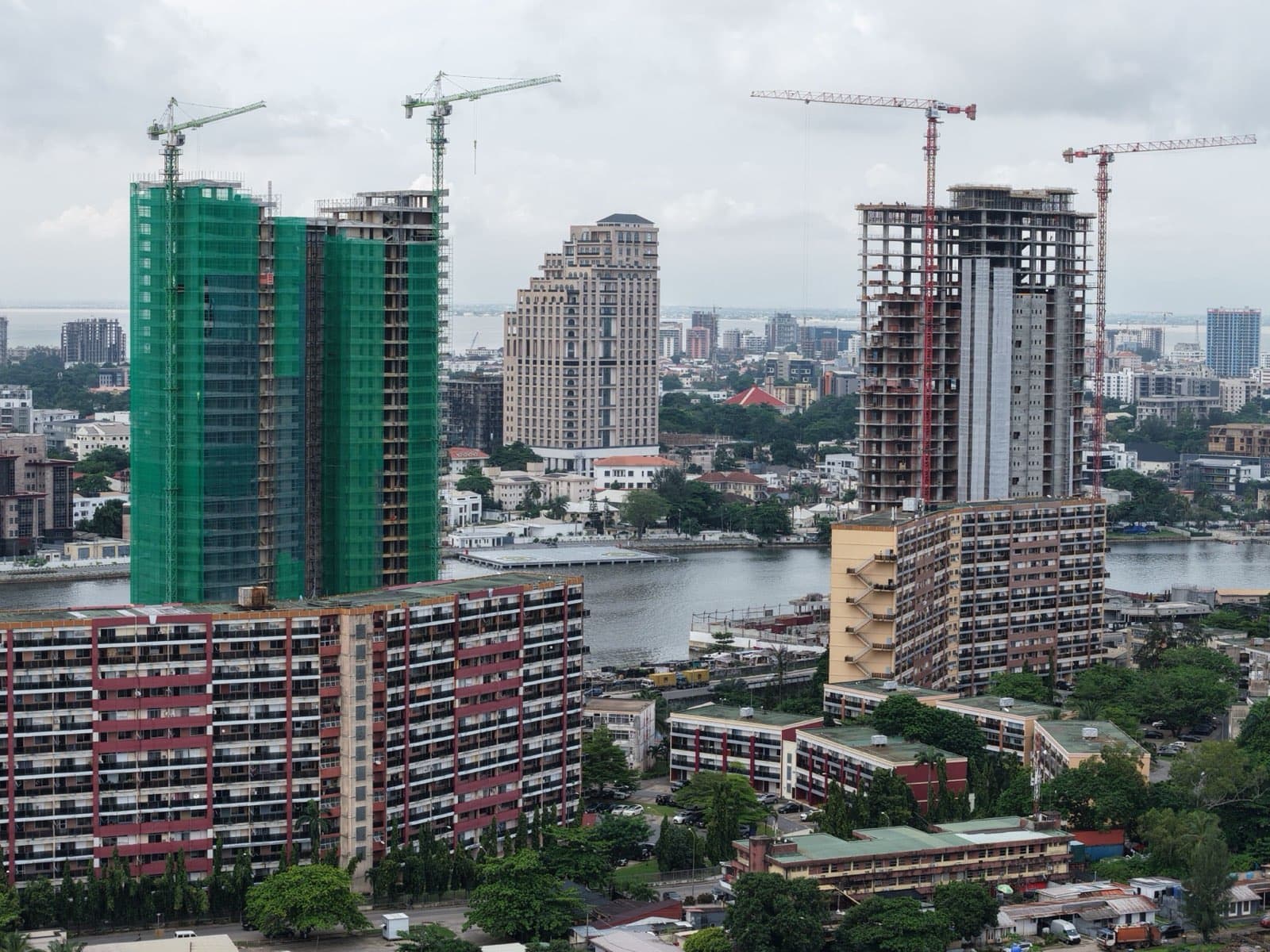
If you manage property in Lagos, you must be registered
Section 27 of the LASRERA Law requires property management companies to register, and failing to do so is an offence. The 10% letting fee cap is older still.

Lagos quit notices: the two mistakes that void them
Notice periods under the Lagos State Tenancy Law 2011, the second notice you must serve before filing, and the four Lagos areas where none of it applies.

Rent relief: the receipt your tenants now need from you
Since January, tenants can deduct 20% of their rent, up to ₦500,000, before tax. A claim needs the rent dates and landlord details, so check your receipts.